
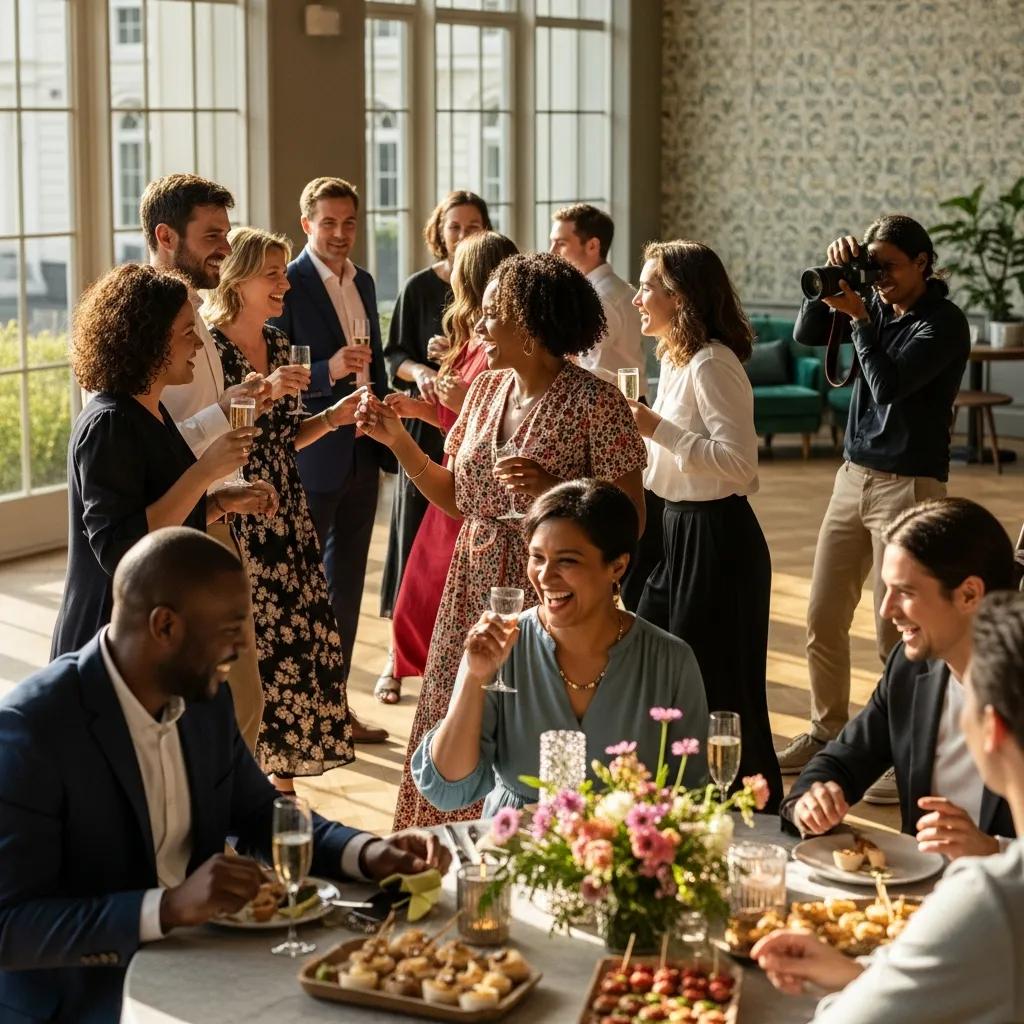
How to Share Your Photography Vision with Clients — Real, Documentary Event Photos
A photography vision is a short, clear statement of the look, mood, and story you want captured at your private event. When you share that vision, photographers can anticipate unscripted moments, focus on the people and interactions that matter, and deliver candid documentary images that feel true to the day. This guide walks hosts and planners through turning mood, logistics, and priorities into a practical brief so documentary photographers can stay unobtrusive and consistent. You’ll get what a photography vision should include, an easy brief template, communication best practices, and the next steps after you hand off your vision — plus copy-ready phrasing and tools like mood boards and prioritized moment lists you can use right away.
Clear direction eases on-day friction by aligning expectations around proximity, intervention, and editing while preserving the spontaneity documentary work depends on. Below we define photography vision, give a compact brief template, map mood words to visual cues, and outline the post-brief workflow from consultation to gallery delivery. Practical keywords like share photo ideas, photographer brief, and event photography mood board ideas are woven into steps you can apply immediately.
What Is a Photography Vision — and Why It Matters
A photography vision combines aesthetic choices, emotional tone, and story priorities that guide how a photographer documents your event. Documentary-style shooting relies on anticipation and context rather than staged direction, so a clear vision tells the photographer which interactions to prioritize and which atmospheres to highlight. Defining this before the shoot reduces guesswork, helps the final gallery match your expectations, and lets the team plan logistics that protect authentic moments.
Seeing how documentary media frames real events makes it easier to appreciate why a focused vision matters for honest storytelling.
Documentary Media: Photos, Video, and Event Storytelling
Documentary media often combines photos and video with context and commentary to depict real topics and moments. That mix helps viewers understand events through observed detail and expert perspective.
Semantic annotation and retrieval of documentary media objects, D Kanellopoulos, 2012
Photography vision matters for documentary coverage for three clear reasons:
- It directs the photographer to the people and interactions that tell your event’s story rather than to staged snapshots.
- It defines the emotional range you want — quiet and intimate or energetic and playful — so the photographer’s instincts match your tone.
- It sets practical priorities that influence positioning, lens choices, and timing so the photographer can remain non-intrusive while anticipating key beats.
With those benefits in mind, the next sections show how to make tone concrete and build a prioritized list of moments for authentic coverage.
How to Describe Your Style and Emotional Tone
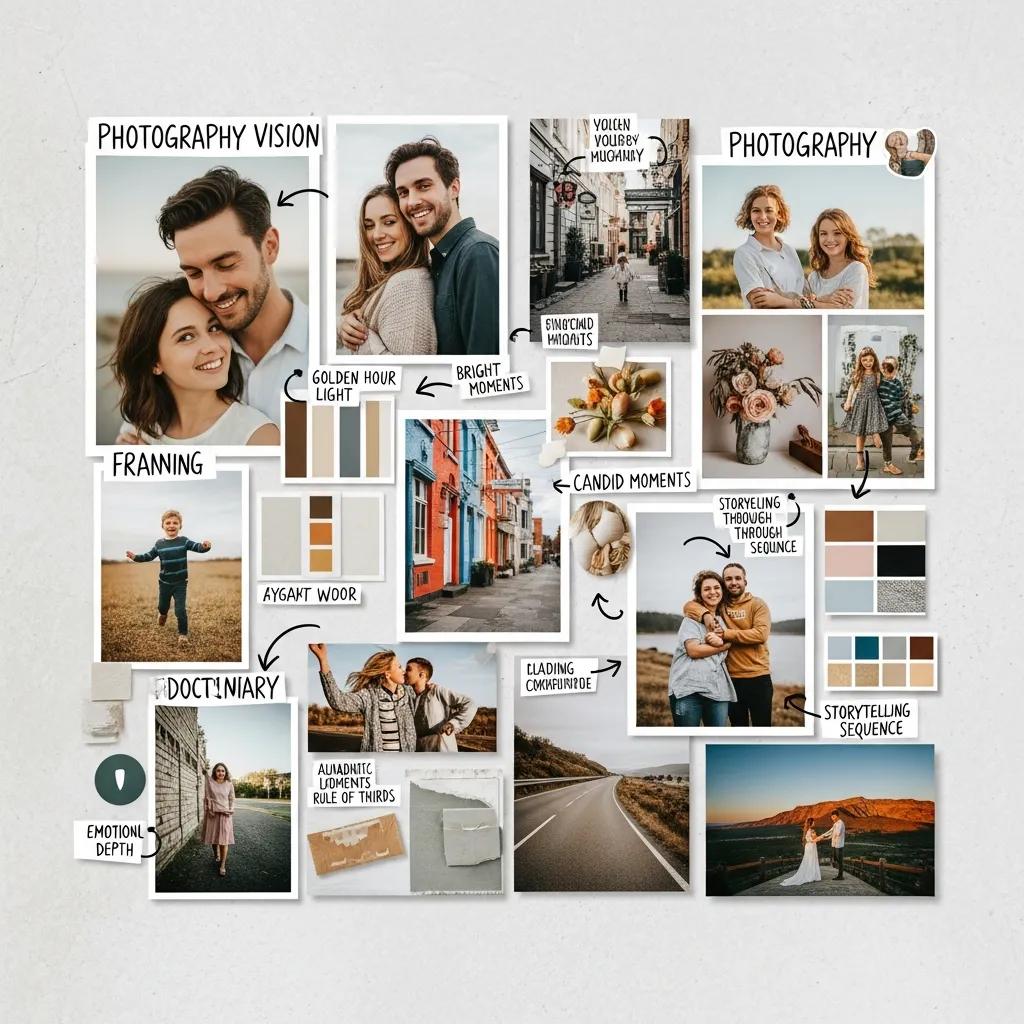
Use three simple tools to describe style and tone: descriptive words, visual references, and short sample sentences you can drop into a brief.
Start with mood words (for example: candid, intimate, cinematic, documentary, playful, reflective) and add a one-line note explaining what each word means in practice. Mood-board images that show feeling — not exact poses — translate adjectives into photographic cues, like shallow depth of field for intimacy or wide compositions for atmosphere.
Paste any of these lines into your brief:
- “We want candid, documentary coverage that prioritizes small interactions and genuine laughter over posed group shots.”
- “Aim for a warm, intimate tone using natural light and minimal posed direction during guest mingling.”
- “Capture the energetic, playful moments on the dance floor while also preserving quieter family exchanges.”
These simple sentences make tone actionable and give a documentary photographer clear guidance for interpreting on-day moments.
Which Moments Matter Most for Authentic Photos?
Prioritize interactions and emotional beats instead of a strict pose list. At private events, authentic moments often include arrivals and welcomes, private exchanges (a whispered toast or a family hug), spontaneous reactions to speeches, laughter between friends, and quiet transitions — like a parent straightening a cuff or someone stepping outside for a breath. Flagging these helps a documentary photographer know where to position and when to be ready without directing the action.
Use this quick prioritized list in your brief:
- Top-priority interactions to capture (for example: first reactions, table conversations)
- People who must be photographed and why (honored guests, immediate family)
- Moments to avoid staging (for example: no posed “first look” unless explicitly requested)
Focusing on people and relationships rather than an exhaustive pose checklist preserves the flow of a documentary shoot and lets the photographer document what truly matters.
Build a Clear Photographer Client Brief
A strong documentary event brief is concise, well-structured, and tells the photographer what to prioritize emotionally and logistically.
Begin with a short event overview, a one-line vibe statement, a ranked people list, key moments, logistics, and links to mood boards or reference images. That structure helps photographers translate adjectives into choices about distance, timing, and editing.
Use this quick checklist as a template:
- Event basics: date, start/end times, venue, and primary contact.
- Vibe statement: 2–3 adjectives plus one sentence describing the desired emotional tone.
- Priority people and moments: a ranked list of people and interactions to capture.
- Logistics: arrival time, load-in details, and any venue movement rules.
- References: 3–6 annotated mood-board images or saved posts that show feeling.
Following that checklist gives documentary photographers the context and priorities they need to capture candid, unscripted moments.
Intro to the brief components table: The table below compares core brief components, why they matter, and how to write them so your photographer can act quickly.
This summary clarifies each element’s purpose. Use these pieces to keep briefs short and actionable.
awesnap photography brief resource: If you want a ready-made structure, awesnap photography offers a downloadable documentary event brief that follows this checklist and includes prompts for mood-board annotations and logistics. Requesting that resource can save time and make sure you don’t miss details.
In short: a well-structured brief uses short, actionable entries — people, moments, vibe, logistics — plus annotated visual references so a documentary photographer can interpret and anticipate without constant direction.
Must-Have Elements for Your Documentary Brief
Start with the essentials: date, venue, timeline, and the main on-site contact. Then add prioritized people and moments and a short vibe paragraph (one or two sentences). For each priority, include a one-line reason so the photographer understands the “why” — for example, “uncle’s reaction is important because he’ll give an unscripted toast that sets the tone.”
Include these items in this order:
- Event basics with on-site contact and an emergency phone (if available).
- A short timeline that highlights candid windows (cocktail hour, speeches).
- Priority people and any guests to avoid photographing.
- Clear “must-capture” vs. “let unfold” guidance.
- Links to annotated mood-board images (note what you like about each).
These elements create clarity and help the photographer translate your vision into on-day choices that preserve spontaneity.
How Mood Boards Make Your Vision Clear
Mood boards are a fast way to show tone — they communicate feeling more effectively than pose-by-pose references. Use images that highlight gestures, lighting, and atmosphere rather than exact poses, and annotate each image with one line about what you like (color, interaction, expression, framing). Sharing the mood board before the consultation gives the photographer the cues they need to choose lenses, framing, and editing.
Build mood boards that include:
- Examples of candid gestures you prefer (hugs, laughter, quiet eye contact).
- Lighting examples (golden-hour warmth vs. low-key indoor tungsten).
- Color and wardrobe cues that match your event palette.
Annotated mood boards cut ambiguity and give documentary photographers the context to capture the right emotional beats without staging them.
Best Practices for Communicating with Documentary Photographers
Early, clear communication prevents mismatched expectations and preserves candid authenticity. Start with a concise brief that lists priority people and top moments, then schedule a pre-event consultation to review the timeline, mood board, and any venue limitations.
Open, practical communication builds stronger working relationships and helps deliver better creative results.
Improving Photographer–Client Communication for Events
Research shows that clear interpersonal communication between photographers and clients improves working relationships, increases satisfaction, and leads to higher-quality results. Open, transparent dialogue helps everyone align on expectations and outcomes.
The Role of Photographer-Client Interpersonal Communication in Improving Working Relationships and Satisfaction in Creative Agency Photography Services, D Purworini, 2021
On the day, give the photographer one primary contact and agree on subtle signals for when a short posed moment is needed versus staying non-intrusive.
Use these five practical actions to align with a documentary photographer:
- Share references early
: Send mood boards and sample images well before the consultation. - Prioritize people and moments
: Rank what matters so the photographer can allocate attention. - Define boundaries
: Say whether you want posed portraits and when, or if coverage should stay candid. - Confirm logistics
: Share load-in, parking, and venue restrictions in advance. - Agree on signals
: Pick one on-site contact and a discreet sign for necessary intervention.
These steps remove on-day guesswork and let the photographer focus on capturing genuine interactions.
Preparing those items naturally leads to the next step: setting clear expectations about candid, unposed coverage.
How to Set Expectations for Candid, Unposed Coverage
Spell out in the brief and contract what “non-intrusive” coverage means: how close the photographer can get, whether flash is allowed in low light, and which moments — if any — should be posed.
Use sample contract language like: “Photographer will prioritize candid, documentary coverage; posed family portraits will be limited to a 20-minute window at X time, unless otherwise requested.”
Include these expectation points to make standards explicit:
- Rules for photographer behavior and distance during different event phases.
- Whether posed portraits are required and when they will occur.
- Editing preferences (natural color grade vs. dramatic stylization).
Laying out these expectations ahead of time prevents surprises and aligns the photographer’s instincts with your desired results. Next, we show an example of how experienced instinct reduces the need for detailed directions.
How Michael Sage’s Instinctive Approach Keeps Things Seamless
Michael Sage’s instinctive, non-intrusive method — rooted in documentary event photography — shows how experienced shooters turn a short brief into quiet anticipation. His process emphasizes observation and minimal intervention, so clients don’t need to give shot-by-shot directions. With a clear vibe statement and prioritized moments, an instinctive photographer positions themselves to capture fleeting exchanges while letting the event unfold naturally.
That approach benefits clients by reducing the need for constant instruction and producing more authentic images. Clear briefs plus seasoned instinct deliver consistent documentary results without micromanaging the shoot, and they free hosts to be present while trusting the photographer to tell the story.
How to Describe the Vibe and Atmosphere of Your Private Event
Turn adjectives into sensory guidance so photographers can render the feel of an event rather than just its actions. Describe lighting, sound level, dress code, and expected energy so photographers can plan lens choices, positioning, and timing. Mapping words to visual cues converts subjective language into actionable directions.
The table below pairs common vibes with example words and image cues to help clients articulate mood clearly for photographers.
This mapping makes it easier to annotate mood boards and gives photographers concrete visual directions that produce the intended atmosphere in candid photos.
Which Words and Examples Help Communicate Mood?
Group adjectives into clusters and add a one-line explanation for each so the photographer knows the intended treatment. For example, “intimate” can mean “close framing and soft natural light,” while “cinematic” might mean “wide compositions and stronger contrast.” Providing short example sentences in your brief removes ambiguity and helps the photographer match shooting and editing choices to your vocabulary.
Try these ready-to-use sentences:
- “We want intimate, warm images — favor close crops and ambient light over posed group shots.”
- “Aim for playful energy during late-night dancing — capture motion and candid expressions.”
- “For quieter ceremony moments, prioritize reverent framing and minimal movement around the couple.”
These lines link adjectives to tangible photographic techniques so a documentary photographer can turn language into action.
Share Logistics and Contacts to Keep Photography Smooth
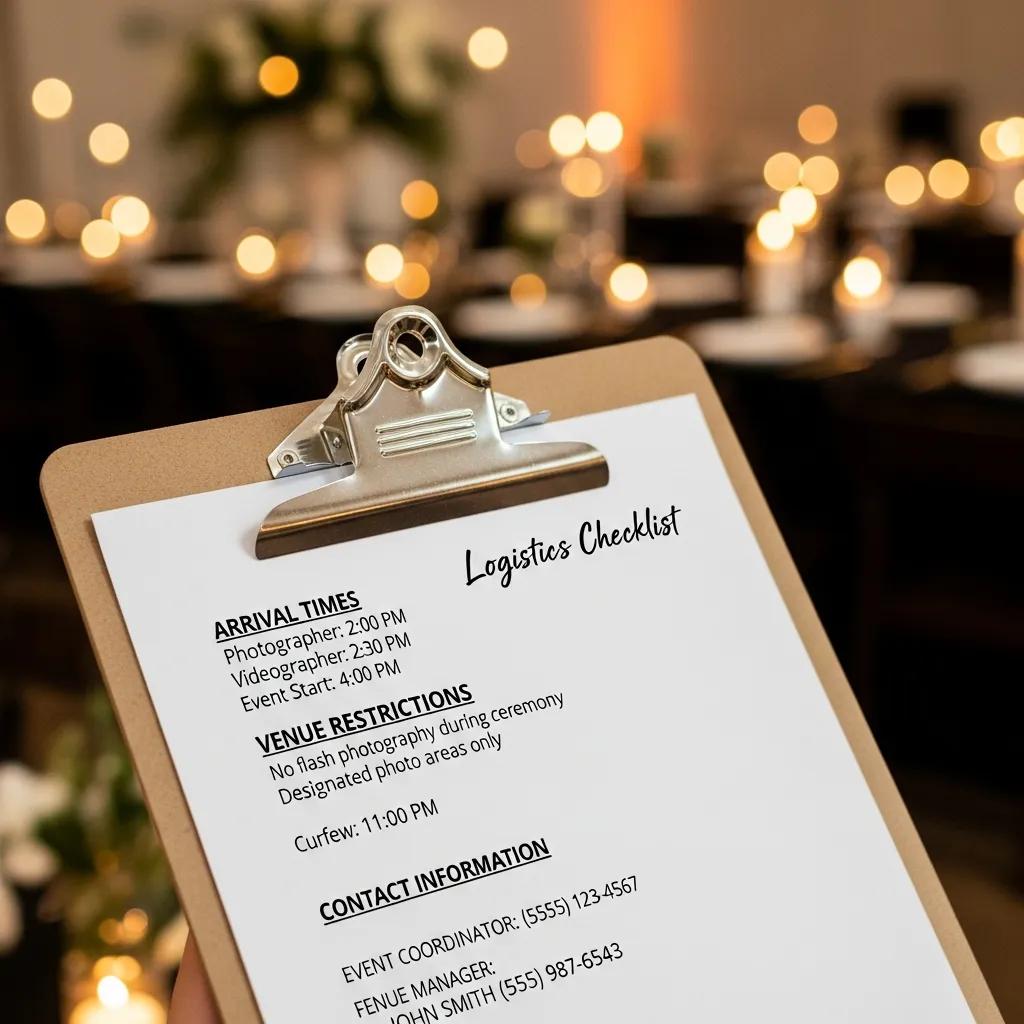
A concise logistics checklist prevents interruptions that undermine candid opportunities. List load-in times, parking, elevator access, venue photo restrictions, and where the photographer can set up gear. Provide a contact tree — primary planner, venue manager, and a family lead — so the photographer has one clear go-to for quick decisions.
Use this copy-ready logistics checklist:
- Arrival and load-in window and any required credentials.
- Designated parking or drop-off zones and nearest elevator/stair access.
- Venue restrictions (flash rules, no-go areas, timing constraints).
- Primary on-site contact and backup contacts with their roles.
Clear logistics reduce surprises, let the photographer position for unscripted moments, and protect the flow of documentary coverage.
What to Do After You Share Your Photography Vision
After you submit your brief and mood board, the next steps are consultation, final confirmation, the shoot, and gallery delivery. A short, ordered process helps both sides align expectations and logistics so the day runs smoothly and the final images reflect the agreed vision. Below are practical post-brief steps to follow.
Follow these ordered steps after submitting your brief:
- Consultation: Review the brief and mood board with the photographer and confirm priorities.
- Confirmation: Finalize timeline, arrival times, and access details.
- On-day approach: Photographer executes documentary coverage using agreed signals and contact flow.
- Delivery: Photographer provides previews and a curated gallery within the agreed timeframe.
How a Consultation Aligns Your Vision with Awesnap’s Style
A focused consultation turns brief elements into a practical on-day plan. Typically it includes a pre-shoot review of your mood board and top moments, a timeline run-through to identify candid windows, and a communication plan for discreet on-site coordination. For example, awesnap photography uses a short pre-shoot checklist: confirm the top three moments, agree arrival/load-in logistics, and pick a single point of contact for the event.
Clients can expect the consultation to confirm:
- The brief and mood-board interpretation and any clarifications.
- Final timeline adjustments and priority confirmations for people and moments.
- On-day coordination details such as discrete signals and photographer staging for unobtrusive coverage.
Intro to post-brief expectations table: The table below outlines each post-brief milestone, what it includes, and the typical outcome or timeline.
What to Expect from Gallery Delivery and Final Results
Expect a curated gallery that reflects the agreed vision and editing style. Curated edits usually include selects and color grading that match the mood board — what awesnap photography calls “Curated” edits — and delivery that aims to be timely and dependable, aligned with their “Clockwork” turnaround promise. Typical timelines include an initial preview within a short window after the event and a full curated gallery delivered within the timeframe confirmed during consultation.
Clear delivery expectations build client trust and reduce post-event uncertainty.
Client–Photographer Trust and Expectation Management
Managing expectations around gallery delivery, edits, and image use helps build trust between client and photographer. Clear promises about timing and what’s included reduce confusion and improve satisfaction.
The Photographer’s Guide to Marketing and Self-Promotion, 2017
Common delivery items to clarify in the brief:
- Initial preview timeline and how many preview images to expect.
- Full gallery delivery window and format (online gallery with downloadable high-res files).
- What “curated” edits include: color grading, selects, and recommendations for prints or extra edits.
Setting these expectations up front reduces uncertainty and ensures the final gallery matches the documentary vision you shared.
- Initial previews
: Expect a short set of curated highlights within days to a week. - Full gallery
: Expect the complete curated gallery within the timeframe confirmed during consultation. - Additional requests
: Request prints or extended retouching after gallery delivery.
These delivery notes finish the workflow from vision to finished photographs and make planning post-event sharing and printing straightforward.
Article ends here.
Conclusion
Communicating your photography vision clearly is the best way to capture authentic moments at your event. By sharing mood boards, prioritized moments, and concise logistics, you give photographers the direction they need to document the true essence of your gathering. This collaborative approach improves image quality and creates a smoother day for everyone. Start building your photography brief now to preserve memories that feel real and personal.
